Computing
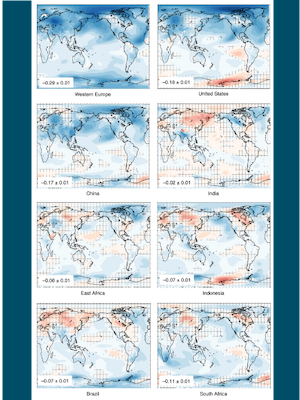
Weather & Climate Modeling
Several research groups apply numerical modeling to understand the behavior and societal impacts of the physical climate system and weather.
- Persad Aero Climate Research Group focuses on the role of particle aerosol emissions in driving inter-regional differences in the magnitude and rate of climate change and in the emergence of heat and hydroclimate extremes.
- Kerry Cook‘s research group works to predict climate change and climate variability around the world.
- The Land Environment and Atmospheric Dynamics Group uses high performance computing, among other methods, to link the atmosphere, ocean, biosphere, cryosphere, and solid earth as an integrated system. Contact Liang Yang.
- The University of Texas Extreme weather and Urban Sustainability (TExUS) Lab develops digital twins and data-to-decision tools, improves severe and extreme weather forecasting and diagnostics, and works on process-scaling scientific understanding for building resilient infrastructure. Contact Dev Niyogi
- The Computational Research in Ice and Ocean Systems (CRIOS) group applies advanced computational methods to improve the understanding of the role of the global ocean, sea ice and the polar ice sheets in the climate system. Contact Patrick Heimbach
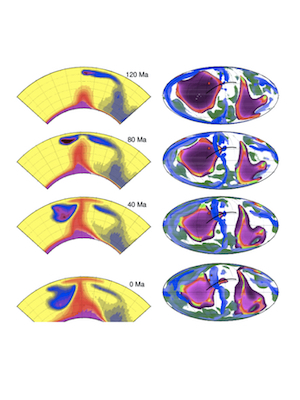
Solid Earth Computational Geoscience
- The UT Austin Geodynamics Team seeks to improve our understanding of Earth’s lithosphere-mantle system, including earthquakes and the physics of plate tectonics, as well as planetary evolution. Contact Thorsten Becker.
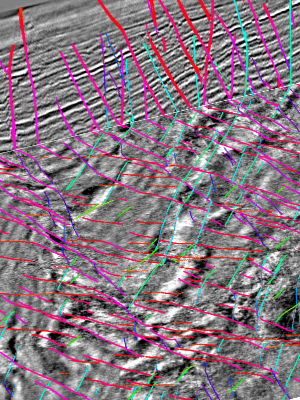
Subsurface Computational Geoscience
- The Texas Consortium for Computational Seismology develops novel methods for seismic data analysis with a focus on both resource exploration and carbon capture and storage. Contact Sergey Fomel.
- Shujuan Mao applies cutting-edge passive seismic interferometry methods to analyze the 4-dimensional (space-time) changes in the subsurface fluid-rock systems.
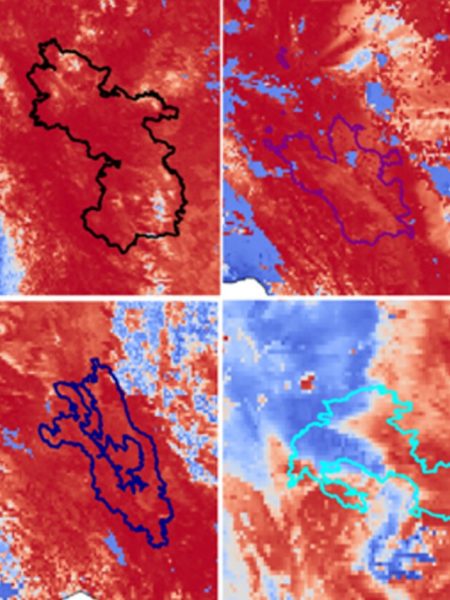
Hydrology and Artificial Intelligence
- Dapeng Feng integrates physical models and artificial intelligence methods to improve simulations and understandings of the terrestrial water cycle.
- Fa Li uses artificial intelligence and remote sensing to study how land ecosystems respond to shifts in the climate and water cycle.
High Performance Computing
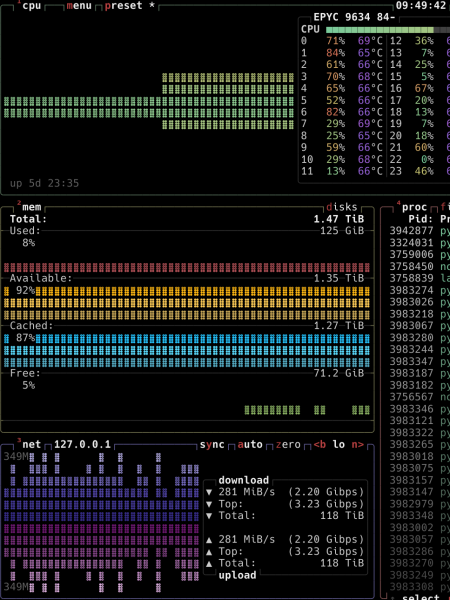
The department maintains several distributed computing clusters with a range of CPU configurations for simulation, data analysis, and software development, along with a dedicated GPU array for machine learning and AI workloads. Most CPU clusters are lab-owned, with capacity shared across the department as idle cores become available.
A redundant, parallel terabyte-scale file system provides shared storage, and a Globus endpoint supports high-throughput data transfers.
For large-scale computing needs, the typical workflow is to develop and test locally before deploying on TACC’s high-performance computing systems.
For questions about access, working with our partners at TACC, or just getting started, contact our Computational Geoscientist or IT staff.